Concerns raised in recent reporting about Roblox point to a much bigger challenge facing families as children grow up in increasingly complex digital environments.
The platform has come under scrutiny from the Australian government after allegations that children were exposed to explicit content and targeted by online predators. These reports highlight a reality many parents already sense: the online spaces young people move through today are not neutral. They are environments filled with competing voices and values.
At the same time, focusing only on regulation or platform accountability misses part of the picture. The Roblox situation also reflects something deeper about how young people grow and form their identity. Childhood and adolescence are not stages where values are simply absorbed and kept unchanged. Young people often begin by adopting the beliefs and behaviours they see modelled by the adults around them. Over time, however, they start to question and reshape those ideas for themselves. What can sometimes look like resistance or rebellion to adults is often part of a very normal developmental process. As they move through this stage, young people are also encountering a wide range of cultural messages, particularly online.
For parents and educators, this raises an important question: how do we create environments where young people can wrestle with difficult ideas safely, rather than doing so alone on the internet?
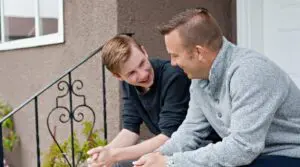
One of the most important foundations is the sense that home is a secure place for those conversations. When children believe they can ask questions or express curiosity without fear of rejection or punishment, they are far more likely to bring confusing or confronting experiences into the open which is exactly what we need them to do. That sense of safety is closely connected to the assurance that they are loved by God and others, regardless of what they encounter online or the mistakes they might make while navigating it. From that base of belonging, young people are much better positioned to develop the confidence and resilience needed to make wise decisions.
Practical habits around technology matter as well. Banning devices altogether or reacting with punishment when something goes wrong rarely leads to open conversations. A more constructive approach is ongoing dialogue paired with clear and consistent boundaries. Simple steps, like keeping devices out of bedrooms and bathrooms, can significantly reduce the likelihood of exposure to harmful material. Just as importantly, explaining the reasoning behind these boundaries helps young people understand that they are not about control but about care and protection. When children are invited into the reasoning behind family guidelines, they are more likely to take ownership of their online behaviour.
The scrutiny surrounding Roblox ultimately reflects a wider reality about raising children in the digital age. Regulation and platform responsibility are important, but technology will almost always move faster than policy. In the end, the most meaningful protection young people have is the strength of the relationships around them especially with their Creator and family. When children grow up in environments where they feel safe, known and able to talk openly about what they are encountering, they are far better equipped to navigate platforms like Roblox and the broader digital world with wisdom and resilience.
Our primary programs are age-appropriate workshops that are designed to support primary students in understanding their bodies, building healthy relationships, and developing the confidence to stay safe and make wise choices as they grow. Specifically:
Grade 1 – My Body Safety
This workshop introduces foundational concepts of body autonomy, consent, and help-seeking by teaching students to understand their “body bubble” and recognise when consent is needed. It helps children identify feelings of safety and lack of safety, notice their body’s warning signals, and confidently name trusted adults they can go to for help.
Grade 2 – Knowing and Protecting My Body
This workshop introduces students to basic body knowledge, including correct anatomical language, while emphasising that their bodies are created by God, good, and worthy of safety and respect. Students learn practical protective behaviours such as recognising unsafe feelings, understanding consent, identifying safe adults, and responding confidently to unsafe situations.
Grade 3 & 4 – How My Body Grows Up
These sessions build on body awareness by introducing puberty, reproduction, and ongoing protective behaviours, helping students understand that bodily changes are a normal and positive part of growing up. Students develop confidence in managing physical and emotional changes, recognising unsafe situations, especially online, and using assertive strategies to seek help and maintain personal safety.
Year 5: Session 1 – When Rubber Hits The Road: Growing Up and Making Choices
This workshop equips students with skills for healthy decision-making, relationships, and navigating the online world, including understanding emotions, boundaries, and consent. It empowers them to identify and respond to risks such as unsafe online content, pornography, sexting, and grooming, while building confidence to respect themselves and others and seek support when needed.
Parent & Guardian Workshops
Parents and guardians can book these workshops for their school or church community, alongside our dedicated Parent & Guardian Workshops, which prioritise partnership by equipping you to lead these conversations at home with confidence and care. Each program includes a comprehensive resource bundle (parent letter, follow-up questions, and our So, Where Do I Even Start? Parent & Guardian’s Guide) and an interactive workshop covering cultural influences (from pornography to purity culture), your role in sexual formation, how and when to have “the talk,” what your young people are being taught, and a live Q&A panel.
Find out more below: